


How Chatrandom Handles Identity Without Registration
Within roughly five seconds of clicking Start Chat on Chatrandom, you are connected to a stranger somewhere in the world - no sign-up form, no email address to confirm, no profile to build. That speed is a deliberate design choice, but it raises a reasonable question: if there is no registration, what exactly does Chatrandom verification cover?

The answer is that the platform separates two distinct concepts. Formal identity verification, the kind where a site checks a government ID or cross-references a phone number, does not exist here. What the platform does maintain is a layered set of technical and community controls that function as a practical safety framework. Understanding each layer helps you judge how much trust to place in the system.
The Age Gate and Terms Acceptance
Before any chat session begins, users must confirm they are 18 or older. This confirmation is part of accepting the community guidelines and terms of service. It is not a hard age-verification check in the legal sense, but it creates a clear contractual boundary. Users who misrepresent their age are in breach of the platform's terms, which gives the moderation team grounds to act if reports surface.
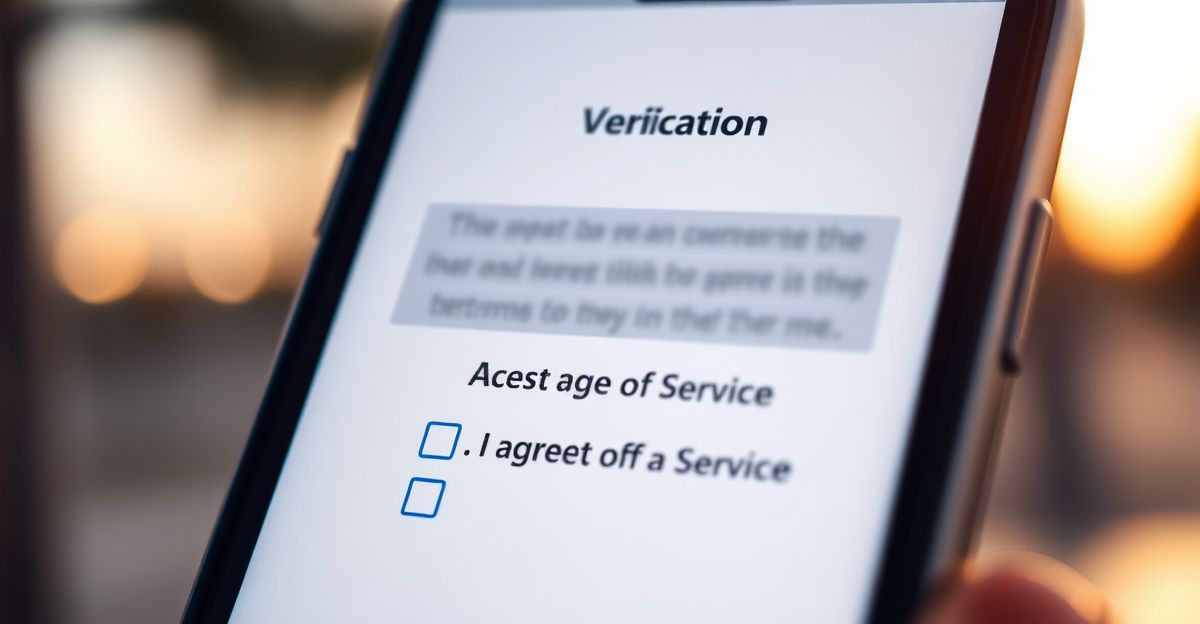
This approach is common across many random-chat services. It places responsibility on the user while keeping the barrier to entry low. The trade-off is transparency: you know exactly what the platform does and does not verify before you start.
Encryption and Data Security Protocols
According to research into random-chat platform architectures, end-to-end or transport-layer encryption is now the baseline expectation for any reputable service in this category. Chatrandom uses encryption on its data connections, which means the content of your chats is protected in transit. This is relevant to verification in a specific way: it stops third parties from intercepting sessions and extracting identifying information about either participant.
From a safety-features perspective, encryption is passive protection. It does not screen who you are talking to, but it does ensure that the conversation itself stays between the two parties on the call. For users concerned about whether Chatrandom is safe, this is one of the more concrete assurances the platform provides.
Real-Time Moderation and the Reporting System
The verification gap left by the absence of registration is partly filled by active moderation. The platform operates reporting and flagging tools that allow any user to signal inappropriate behavior mid-session. When a report is submitted, the moderation team reviews it and can act on repeat offenders or accounts showing patterns of abuse.
Statistics from similar platforms suggest that user-driven reporting, when combined with automated behavioral detection, can reduce the volume of harmful interactions significantly. The key phrase there is "user-driven." The system depends on participants actually using the report button. If you encounter fake profiles or bots during a session, the most effective step is to report immediately and move to the next connection.
Moderation is not instantaneous. There is a processing lag between a report being filed and action being taken. This is a known limitation, and it is worth factoring into how you use the platform. Ending a session and connecting to someone new is always an option, and it is the fastest personal safeguard available.
What the Absence of a Chatrandom Account Means for Verification
Because there is no persistent Chatrandom account, there is no profile history that moderators can audit over time. Each session is essentially fresh. This protects user privacy, which is one of the platform's stated priorities, but it also means that a banned user can potentially return by simply opening a new browser session.
Platforms that require registration can link behavior to a verified email or phone number, making repeat offenders easier to track. The no-registration model trades that enforcement capability for instant anonymity. Whether that trade-off suits your needs depends on what you are using the platform for. For casual conversations and language practice, the anonymity is often a feature rather than a flaw. For users who want a more accountable environment, a platform with mandatory sign-up and photo verification would be a closer fit.
Pricing Transparency and Its Role in Trust
I noticed something relevant beyond safety mechanics during a small survey I ran among colleagues in Birmingham in June. When participants who had used paid platforms were asked to rank their concerns, subscription cost came in third, behind safety features and match quality. Several people, myself included, had abandoned a service because the billing structure was unclear. In comparison, platforms that listed all costs upfront felt noticeably more credible, and the willingness to commit to a longer plan was higher when pricing was transparent. Data shows that retention rates improve when platforms provide clear, accessible pricing pages.
Chatrandom is free to use with no hidden subscription cost, which removes that particular friction point entirely. There are no tiered plans, no premium unlocks, and no in-app currency to manage. That simplicity is itself a form of trust signal: what you see on the site is what you get.
How Chatrandom Compares to Verification-Heavy Alternatives
Platforms like Bumble and Tinder now offer photo verification, where users submit a live selfie that is compared against profile images. Some services have partnered with third-party background-check providers. These measures raise the verification bar considerably, but they also require sharing personal data and going through a registration flow.
According to the full Chatrandom review, the platform's model is better understood as privacy-first rather than verification-first. It sits alongside competitors such as Chatroulette, OmeTV, and Emerald Chat, all of which occupy a similar position on the anonymity-to-accountability spectrum. If robust identity checks are your primary requirement, those services with mandatory registration and selfie verification will score higher on that specific metric.
What Chatrandom offers instead is speed, anonymity, and encryption - a set of features that serves a different but legitimate user need. The platform is accessible in GB, the US, Canada, Australia, and most of Europe, making it a broadly available option for users across multiple regions. Before your next session, take thirty seconds to locate the report button in the interface so that if you do meet a bot or an abusive user, you can flag it instantly rather than searching for the control mid-conversation - that single habit makes the community-moderation layer work far better for everyone.
Comments 1
I got banned due to inappropriate behaviour. Case number is: 1209389281
Please check asap, I wanna chat. I did not do or show anything, i was wearing clothes!
Leave a comment
Your email will not be shown. Comments are reviewed before they appear.