

Why Fake Profiles and Bots End Up on Random Chat Platforms
Random chat platforms attract millions of users precisely because there is no registration barrier. You click, you connect, you talk. That openness is genuinely appealing, but it also means automated scripts and bad actors can enter the same way you do. Chatrandom matches you with a new stranger within roughly 5 seconds, which is impressively fast - and it is that speed that bots are designed to exploit before you have time to think critically about who you are actually talking to.
Bots on platforms like this are usually deployed for one of three reasons: to harvest personal data, to push users toward external websites, or to run romance-style scams that escalate over multiple sessions. Fake profiles operated by real people follow a similar playbook, but with more conversational nuance. Both are worth understanding separately.
The Clearest Warning Signs of a Bot
Bots follow scripts, and scripts have patterns. The first thing to notice is response timing. A bot often replies almost instantly, regardless of how complex your message was. Conversely, some bots introduce a fixed delay to seem more human, but the cadence feels mechanical rather than natural. If you send a deliberately confusing or nonsensical sentence and receive a perfectly coherent reply that ignores the confusion entirely, you are almost certainly talking to an automated process.
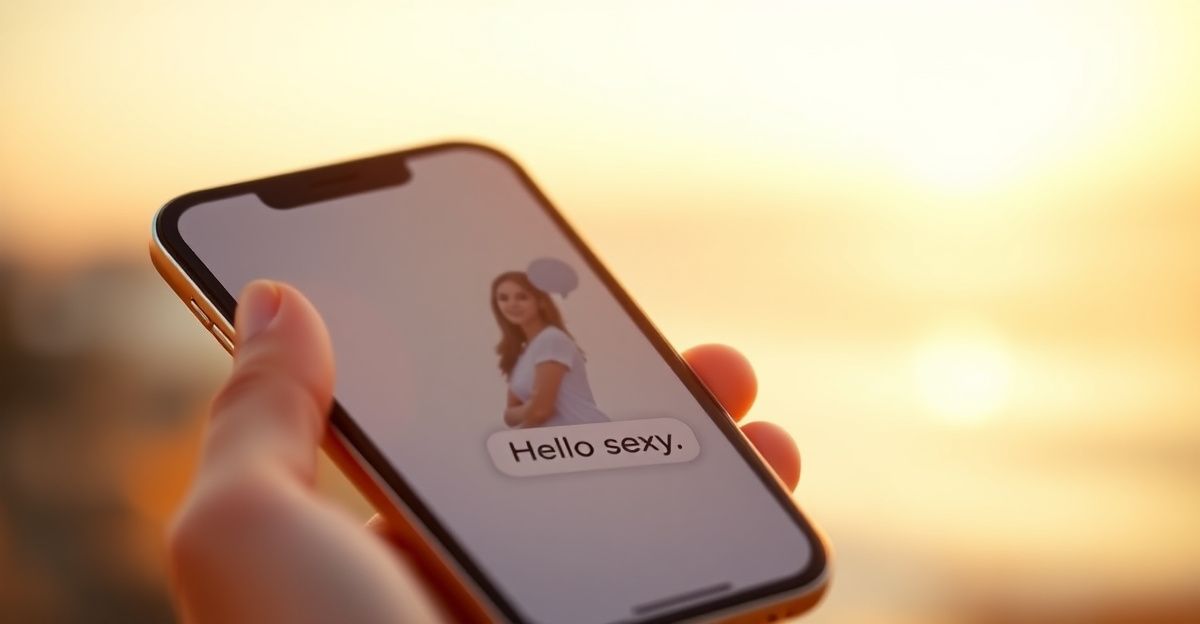
Watch for generic openers too. Phrases like "Hey, you seem interesting, check out my link" or "I have a private gallery, come see" appear in the first one or two exchanges. A real person getting matched with a stranger typically asks something contextual - where you are from, what you do, what brought you to the platform. Bots skip that social warmth entirely.
Think about this: if the person you are matched with never asks you a follow-up question, that is a strong signal. Human conversation is reciprocal. Bots are transactional.
How Fake Human-Operated Profiles Behave Differently
A real person running a fake profile is harder to detect because they can adapt. They will ask questions, laugh at jokes, and build a sense of connection over several minutes or even multiple sessions. What gives them away is a different set of behaviours.
One red flag is an unusually polished appearance with no context. On a platform where most people appear on a webcam in ordinary surroundings, someone who looks professionally lit and perfectly styled in every frame deserves a second look. Researchers studying fake dating profiles have noted that stolen images are often sourced from social media accounts of models or influencers, meaning a reverse image search can be genuinely revealing.
Reflect on this question: how quickly did this person suggest moving the conversation off-platform? Moving to WhatsApp, Telegram, or a personal email address within the first few minutes is a consistent pattern among scammers. It removes the in-platform moderation layer and makes reporting harder. Be kind to yourself if you have fallen for this before - it is designed to feel natural.
Requests for money, even framed as emergencies or small favours, are an absolute hard stop. No genuine new connection made on a random chat platform has a legitimate reason to ask you for financial help. The UK's Action Fraud service recorded a significant rise in romance scam losses in 2022, with victims losing an average of thousands of pounds per case - real financial harm that starts with what feels like a harmless chat.
A Personal Perspective on Profile Authenticity
Here is something worth reflecting on. A while back, I realised my own profile photo was taken in 2021 and by spring 2023 it looked almost nothing like me - a friend pointed it out one Thursday evening in Leeds. That small gap between image and reality was eroding trust before any real conversation began. The parallel for spotting fakes is direct: authentic people tend to use current, contextual photos. When someone's appearance seems too consistent, too curated, or too perfectly lit for a spontaneous chat, it is worth pausing. Try this - pay attention to how natural someone looks on their end of the call. Real people in real environments have imperfect lighting, ordinary backgrounds, and occasional interruptions. Staged perfection is a signal, not a compliment.
What Chatrandom Does to Protect You
Chatrandom uses encryption to protect data in transit, and the platform provides in-built reporting and moderation tools. When you encounter someone behaving inappropriately, the report button is there for a reason - use it. The moderation team reviews reports and acts on patterns of abuse. You can read more about the platform's approach to user safety on the is Chatrandom safe page, which covers the security protocols in more detail.
It is honest to acknowledge, as the platform itself does, that no moderation system catches everything instantly. Some bots and fake profiles will slip through, particularly in the first moments before a report accumulates. Your own ability to recognise the signs is the most reliable layer of defence you have.
If you have had a specific negative experience, the Chatrandom complaints page outlines how to escalate concerns beyond the in-chat report function.
Practical Steps to Protect Yourself in Every Session
You can take a step right now to make your sessions safer. First, never share identifying information - your full name, location, workplace, or phone number - with someone you matched with less than ten minutes ago. This sounds obvious, but bots and scammers are specifically trained to make that exchange feel natural and mutual.
Second, if you suspect a bot, ask an open-ended question that requires genuine context to answer. Something like, "What was the last thing that genuinely made you laugh?" A bot will either give a generic answer or pivot to its script. A real person will pause and answer something specific.
Third, use the video chat feature as a verification tool. Chatrandom's random video chat is the core of the platform, and a live, responsive face on camera is the fastest way to confirm you are not talking to an automated text-based script. If someone is text-only and resists switching to video without a clear reason, treat that as a warning sign worth acting on.
What if you are unsure whether a report is warranted? The answer is straightforward: report anyway. The moderation system is built to filter patterns across many reports, so a single cautious report does no harm and may protect someone else. You can find a step-by-step walkthrough of the process on the how to report someone on Chatrandom page.
Comments
No comments yet.
Leave a comment
Your email will not be shown. Comments are reviewed before they appear.